
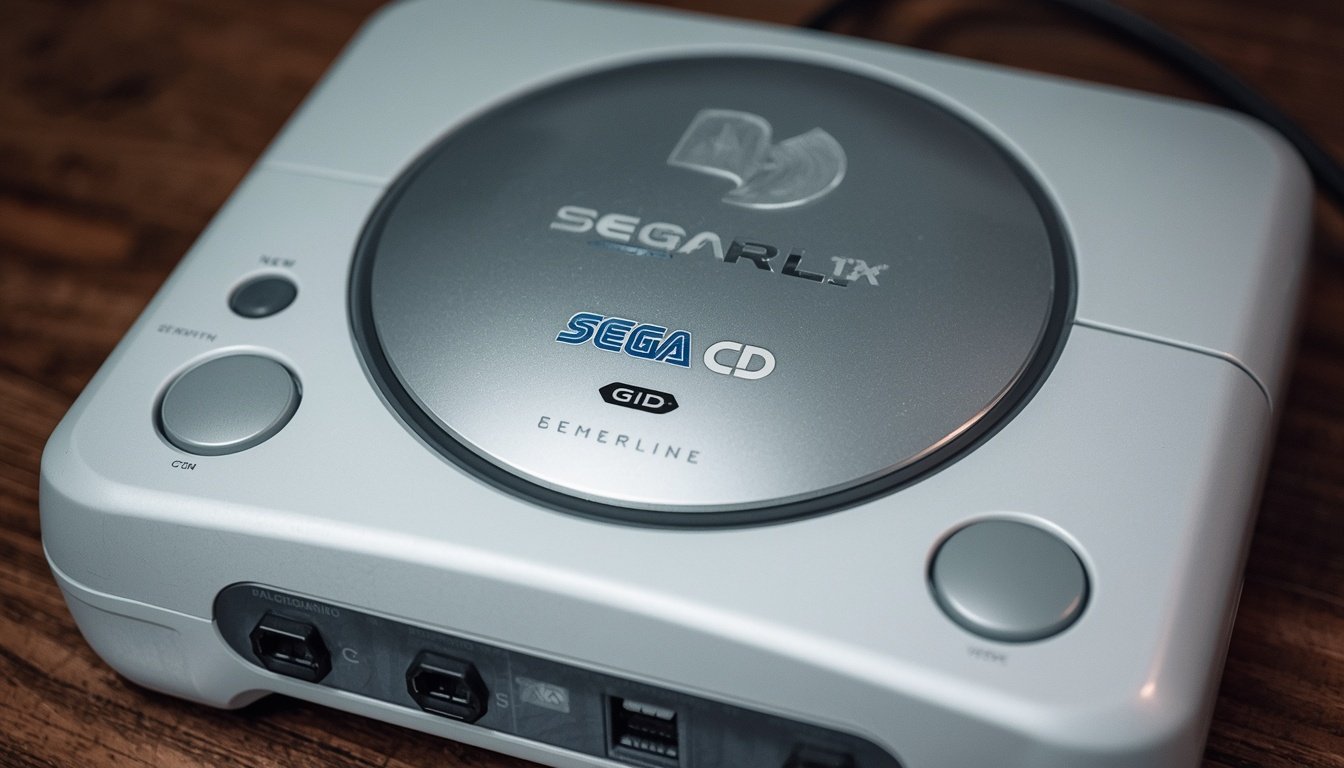

The Sega CD arrived with a promise that sounded almost futuristic in the early 1990s: your Genesis could suddenly play games from a shiny little disc, with bigger music, better sound, video sequences, and stories that seemed far more ambitious than anything the cartridge machine could normally handle.
Some of that promise aged badly.
Some of it aged beautifully.
If you dig through the library now, there are plenty of odd experiments, FMV games that feel like glorified interactive movies, and titles that probably should have stayed in the development room. Yet buried underneath all that is a surprisingly interesting collection of games. A few are genuinely excellent, and several others are fascinating precisely because they could only have existed during that strange period when developers were figuring out what CD technology actually meant for console games.
That is why picking the best Sega CD games isn’t as simple as grabbing the highest-rated names and calling it a day. The system had personality. Weird personality, sometimes.
Lunar: The Silver Star still feels special
If I had to hand someone one Sega CD game and say, “Here, this is why the system mattered,” I’d probably choose Lunar: The Silver Star.
The opening hours are almost deceptively traditional. You have a young hero, a childhood friend, a big adventure waiting outside town, and plenty of classic RPG ingredients. Then the game gradually expands, and suddenly you’re invested in the characters rather than simply wondering where the next dungeon is.
And the presentation is a huge part of the charm.
The animated scenes, CD-quality music, voice acting, and larger story made Lunar feel unusually luxurious compared with many cartridge RPGs of the period. It wasn’t trying to hide the fact that the Sega CD had more storage. It showed off.
The combat isn’t revolutionary by modern standards, either. That’s fine. The appeal is the whole package, particularly the characters and that slightly old-fashioned adventure feeling.
There is heart here. Real heart.
For anyone exploring Sega CD RPGs, Lunar is an easy starting point.
Snatcher is the weird one you remember
Then there’s Snatcher, which is almost impossible to discuss without sounding like you’re recommending something much stranger than it actually is.
The game is a cyberpunk detective adventure influenced heavily by movies, manga, and science-fiction stories. You play Gillian Seed, investigating artificial beings called Snatchers in a future version of Neo Kobe City.
Sounds normal enough. It gets weird.
What makes Snatcher so memorable is the atmosphere. The locations, dialogue, characters, music, and investigation mechanics create a world that feels surprisingly dense for a game from this era.
It also has that unmistakable Hideo Kojima flavor, long before the name became attached to giant-budget productions. The storytelling can be melodramatic and occasionally ridiculous, but I mean that affectionately.
And if you’re expecting a conventional action game, don’t. Snatcher is closer to a cinematic adventure with shooting sequences sprinkled throughout.
Still, it belongs in any serious discussion of the best Sega CD games because it pushed the hardware toward something unusual rather than simply giving an existing Genesis formula a bigger soundtrack.
Sonic CD remains the obvious heavyweight
It would be ridiculous to talk about the Sega CD without mentioning Sonic CD.
Yes, everyone knows it.
But familiarity shouldn’t count against it.
The time-travel mechanic gives the game its own identity, with different versions of stages depending on whether Sonic is running through the past, present, or future. Some levels feel brilliant. Others can be a little confusing when you’re trying to understand exactly what the game wants from you.
Then there is the music.
Depending on the regional version you’re playing, the soundtrack can sound dramatically different, which has created decades of arguments among Sonic fans. I won’t settle that argument here. Life is too short.
The game itself holds up remarkably well, though. Sonic feels fast without the whole experience becoming mindless speed, and the visual design has plenty of personality.
But here’s my mild disagreement with the common retro take: Sonic CD isn’t automatically the greatest Sonic game just because it was technically ambitious. I’d put several other Sonic titles above it as pure games.
As a Sega CD showcase, though? Absolutely.
Final Fight CD fixed one huge problem
Arcade ports on home consoles were often compromised in some obvious way. Missing animation. Smaller sprites. Cut-down sound. Fewer enemies. Sometimes the whole thing felt like a photocopy of the arcade original.
Final Fight CD came much closer to delivering the real thing.
The CD format helped with the music and presentation, while the game retained the aggressive side-scrolling brawler action that made Final Fight popular in arcades. It feels immediate, physical, and satisfyingly simple.
No complicated skill tree.
No crafting system.
Just punch the bad guys.
The soundtrack gets a noticeable boost, and the overall package feels considerably more complete than some earlier console versions. For fans of old-school beat-’em-ups, this is one of the Sega CD games that makes the hardware feel useful rather than gimmicky.
It also has that wonderfully specific 1990s arcade energy that modern games rarely attempt.
Earthworm Jim: Special Edition gets silly in the best way
Earthworm Jim: Special Edition is easy to overlook because the original game already existed on other platforms.
That would be a mistake.
This version adds new material, tweaks the gameplay, and generally gives the bizarre platformer a little extra breathing room. Earthworm Jim was already strange enough, but the Sega CD edition leans into the cartoon insanity.
And honestly, that’s the right approach.
The game never takes itself seriously. You’re an earthworm wearing a robotic suit, fighting enemies that look like they escaped from a Saturday morning cartoon after someone drank too much soda.
The controls can still be a little slippery, and some sections have aged better than others. Yet the humor and visual style remain surprisingly distinctive.
Sometimes a game doesn’t need to be profound.
Sometimes you just need a worm with a ridiculous gun.
Shining Force CD is a different kind of classic
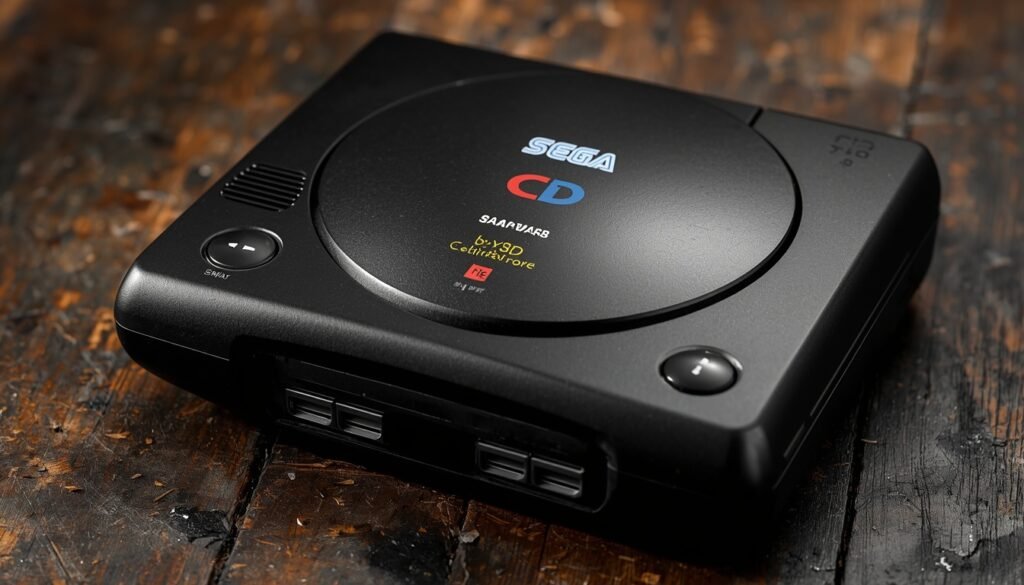
Strategy RPG fans got something special with Shining Force CD.
Rather than simply being a flashy demonstration of CD technology, the game focuses on tactical battles and progression. Positioning matters, enemy movement matters, and rushing ahead because you feel confident is a reliable way to make the screen suddenly look much worse than it did thirty seconds earlier.
The structure draws from earlier Shining Force material while bringing together content in a package designed for the Sega CD.
It has an old-school pace, too. Battles don’t fly by, and the interface won’t hold your hand like modern strategy games often do.
That can be a feature.
For me, the appeal is watching a group of characters gradually become useful as a team. One bad decision can ruin a fight, and somehow that makes winning feel better.
Popful Mail deserves more attention
Here’s one that tends to get less attention than it deserves.
Popful Mail is a charming action RPG with colorful visuals, platforming, exploration, and a cast that feels much more playful than the average fantasy adventure of its era.
Mail herself has a great personality. She’s stubborn, funny, and generally more entertaining than the standard silent hero wandering around a medieval village.
The game also benefits from the Sega CD’s audio capabilities. The music has more room to breathe, and the overall presentation feels polished without becoming obsessed with showing off the hardware.
And that’s probably why I like it.
It doesn’t scream, “Look what this CD can do!” every five minutes. It just happens to make good use of it.
A little underrated. Maybe more than a little.
The original Mortal Kombat isn’t the reason to buy a Sega CD
Mortal Kombat on Sega CD is interesting, but I wouldn’t put it near the very top of the library.
The attraction is obvious: digitized fighters, violence, and the famous arcade presentation moved into the living room. For a teenager in the 1990s, that was a big deal.
But the port has limitations.
Loading screens interrupt the action, and the overall experience isn’t as clean as you’d hope. Still, it matters historically because the Sega CD helped push the idea that consoles could reproduce experiences that once belonged almost exclusively to arcades.
And sometimes historical importance and pure playability are two different things.
That’s okay.
The Terminator is surprisingly good
Licensed games usually make me nervous.
The Terminator on Sega CD is one of the exceptions worth checking out. It combines shooting, platforming, and a dark atmosphere that fits the source material much better than you’d expect from a licensed console game.
The presentation has a gritty feel, and the soundtrack adds plenty of atmosphere.
More importantly, the game doesn’t feel like it exists solely because somebody wanted to put a movie logo on a box. There is actual effort here.
It isn’t flawless. Some sections drag, and the difficulty can be stubborn.
Still, if you’re digging through the deeper Sega CD library rather than sticking to the obvious names, this is one of those pleasant surprises.
Road Avenger shows exactly how strange the Sega CD could get
Now we get to the FMV side of things.
Road Avenger is essentially an interactive animated movie built around quick reactions. You watch the action and respond at the right moments, steering the story through a series of dramatic sequences.
It sounds primitive now.
It was primitive then, too, in some ways.
But that doesn’t make it boring.
The animation has a very particular Japanese action-cartoon flavor, and the whole thing feels like somebody asked, “What if we put an anime chase scene inside a video game?”
The answer was Road Avenger.
You aren’t getting deep mechanics here. That’s not the point. It’s a time capsule from the moment developers were fascinated by the possibilities of full-motion video.
Why the Sega CD library is still fun to explore
The strange thing about the Sega CD is that its library doesn’t always reward you for thinking like a modern gamer.
Some of these games are short. Some have awkward controls. Others contain loading screens that make you wonder whether your console has gone to make tea.
But the experimentation is fascinating.
The hardware arrived during a period when developers were trying to work out what CD storage meant for games. More music was the easy answer. Voice acting was another. Full-motion video became the big obsession. RPGs could suddenly carry more dialogue and animated scenes.
Some experiments worked.
Some absolutely did not.
That’s part of the fun.
If you’re building a shortlist of the best Sega CD games, I’d start with Lunar: The Silver Star, Snatcher, Sonic CD, Final Fight CD, Popful Mail, Shining Force CD, and Earthworm Jim: Special Edition. Then I’d wander outward into the stranger titles, because that’s where the system starts showing its real personality.
And don’t worry if you don’t love every famous game.
Retro gaming has become a little too obsessed with having the “correct” opinions. You don’t need to pretend a 1990s game is perfect because someone online called it a masterpiece.
Play the weird stuff.
Try something obscure.
Let a game surprise you.
That’s where the Sega CD gets interesting, usually when you’re least prepared for it.
A Few Questions People Ask
What are the best Sega CD games to start with?
Start with Sonic CD for platforming, Lunar: The Silver Star for RPGs, and Final Fight CD for arcade action. Those three give you a pretty good feel for what the hardware was capable of.
Is Sega CD worth playing today?
Absolutely, especially if you enjoy 1990s games and don’t mind some dated mechanics or loading screens. The library has enough unusual titles to make exploring it worthwhile.
What is the rarest Sega CD game?
Rarity varies by region, condition, and whether you’re talking about complete boxed copies, so there isn’t one simple answer. Collector prices can also swing quite a bit.
Was Sonic CD the best Sega CD game?
It’s probably the most famous, but “best” depends on what you want. For me, Snatcher and Lunar make a very strong case because they use the system’s strengths in completely different ways.