

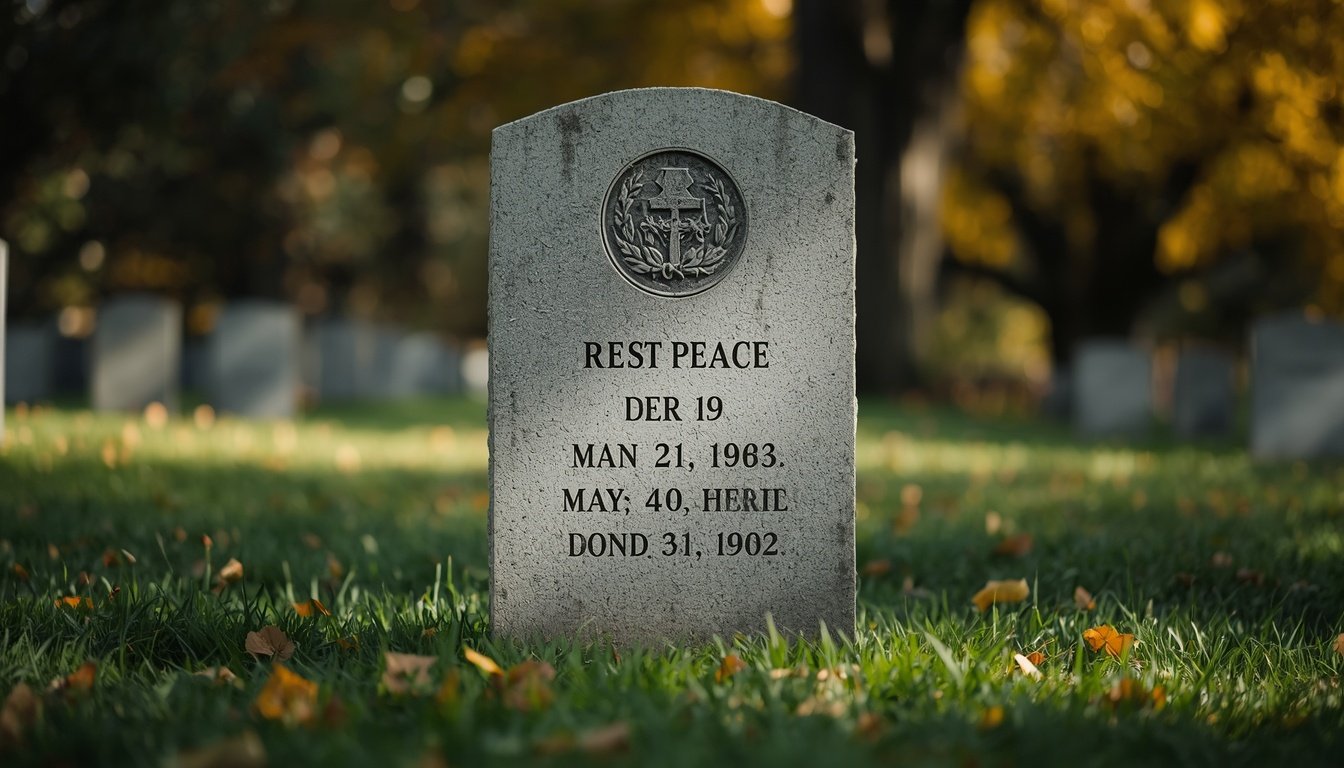

If you have ever seen RIP written under someone’s photograph after they died, you probably already know what it means. Still, plenty of people search for the exact RIP full form in death, especially when they come across the abbreviation in a condolence message, obituary, social media post, or even on a gravestone.
The answer is simple: RIP means “Rest in Peace.”
Three letters. A very heavy meaning.
You will see it everywhere. Facebook posts, Instagram comments, newspaper notices, memorial cards, and sometimes handwritten messages. People use it so often that it can feel almost automatic, but the phrase has a much longer history than social media.
So where did it come from? Why do people say it after someone dies? And is RIP always religious?
Let’s clear that up without making it unnecessarily complicated.
What does RIP actually stand for?
RIP stands for Rest in Peace.
It is generally written after someone’s death as a way of expressing respect, remembrance, or sympathy. A person might write “RIP John” under a memorial photograph, while someone else might use the complete phrase, “May he rest in peace.”
Both are getting at the same basic idea.
And the punctuation doesn’t really matter.
You might see RIP, R.I.P., or simply Rest in Peace. There is no secret difference between them. The version with periods is an older style of writing abbreviations, while the shorter version has become especially common online.
If you are writing a condolence message, either form can work.
The meaning comes from the context.
Why do people say “Rest in Peace” after a death?
The phrase is essentially a wish for peace for someone who has passed away.
That sounds straightforward, and it is. But people use it for slightly different reasons. For one person, RIP may be connected to religious beliefs about the afterlife. For another, it may simply be a respectful way to acknowledge someone’s death.
You don’t have to be deeply religious to use the phrase.
Sometimes a person sees a sad announcement online and doesn’t know what to say. They don’t want to write something overly personal, especially if they didn’t know the deceased very well. A simple “RIP” gives them a way to show respect without saying too much.
And honestly, there is nothing wrong with that.
Grief doesn’t always produce beautifully written sentences. Sometimes people just type three letters because those are the only words they can think of.
Where did the phrase come from?
“Rest in Peace” has old religious roots.
The expression is commonly connected with the Latin phrase requiescat in pace, which translates roughly to “may he or she rest in peace.” It became associated with Christian burial traditions and inscriptions on graves.
Over many years, the phrase moved beyond those original settings.
People began using it in everyday writing, newspapers, memorials, and eventually on the internet. The abbreviation RIP made the phrase even easier to use.
That is probably one reason it has survived so well.
Language changes constantly. Long phrases get shortened, people invent slang, and old expressions disappear. Yet RIP is still instantly recognizable centuries after versions of the phrase first appeared.
Pretty impressive for three letters.
Is RIP a religious phrase?
It can be, but it doesn’t have to be.
Because of its historical connection with Christian traditions, some people use “Rest in Peace” as a religious expression. In that context, the words may carry a deeper meaning connected with the soul, eternal rest, or hope for peace after death.
Other people use RIP without thinking about religion at all.
For them, it is simply a conventional expression of sympathy. You can see this especially on social media, where people from completely different backgrounds may use the same abbreviation.
So I wouldn’t assume someone’s religion just because they wrote “RIP.”
That would be reading too much into three letters.
The meaning depends on the person, their beliefs, and the situation.
Why is RIP so common on social media?
Social media has made RIP even more visible.
When someone dies, news can spread incredibly quickly. A family member might publish a photograph, a friend might share an announcement, and within an hour there may be hundreds of comments.
Most people don’t know exactly what to write.
“RIP” is short, familiar, and immediately understood.
And when a post already contains the details of someone’s death, there may not be much else to add. Someone who knew the deceased closely might write a long personal message. A distant acquaintance may simply say, “Rest in peace.”
Both responses can be sincere.
There is a common idea that short condolence messages are somehow less meaningful. I don’t completely agree with that. A person can write two thoughtful words or two hundred empty ones. Length doesn’t decide sincerity.
That said, if someone you know personally has lost a family member, a little more effort is usually kinder.
“I’m really sorry for your loss” can mean more to a grieving person than a generic abbreviation.
RIP full form in death is different from other uses
Here’s where the search results can get confusing.
RIP doesn’t always mean “Rest in Peace.”
In technology, RIP can mean Routing Information Protocol, which is a networking protocol. That’s obviously a completely different thing.
The abbreviation can have other meanings in different industries and situations too.
So if you simply search “RIP full form,” you may get several answers. The surrounding context tells you which one applies.
If you see RIP beside the name of someone who has died, however, there isn’t much mystery.
It means Rest in Peace.
If you see RIP in a computer networking lesson, don’t start looking for a funeral announcement.
Context saves the day.
Does RIP mean the person is literally resting?
Not necessarily.
The phrase is an expression rather than a statement that can be measured or proven. Its interpretation depends on a person’s beliefs.
For religious people, “rest in peace” may have a spiritual meaning. For others, it can simply be a poetic way of saying that they hope the deceased is at peace.
Language around death tends to work this way.
People say “passed away” instead of “died.” They talk about someone being “gone” or “at rest.” These phrases soften a subject that is naturally difficult to discuss.
RIP belongs in that same group.
It gives people a familiar way to talk about death without using blunt language.
How should you use RIP in a message?
There is no complicated rule.
If you’re commenting on a memorial post, “RIP” or “Rest in Peace” is generally acceptable. You could also add the person’s name or a short personal sentence.
For example, someone might write:
“Rest in peace, David. You will be remembered.”
Or simply:
“RIP.”
The right choice depends on how well you knew the person.
If you knew them personally, adding a genuine memory can make the message feel much warmer. If you barely knew them, keeping it simple is perfectly reasonable.
And don’t force yourself to sound poetic.
A sincere sentence is better than some dramatic line copied from somewhere else.
What is the difference between RIP and condolences?
People sometimes treat these as exactly the same thing, but there is a small difference.
RIP is directed toward the person who has died. It expresses a wish that they rest peacefully.
Condolences, on the other hand, are usually offered to the family or friends who are grieving.
For example:
“RIP Ahmed.”
That’s directed toward Ahmed.
“I am sorry for your loss.”
That’s directed toward the people who are still here.
Both expressions have their place.
So, if your friend’s parent has died, saying “I’m sorry for your loss” may be more appropriate than simply commenting “RIP” on a post. The latter isn’t necessarily rude, but it doesn’t directly acknowledge your friend’s pain.
Small difference. Big effect.
Can RIP be used for animals?
Yes, especially online.
People sometimes write RIP when a beloved pet dies. Someone might post a picture of their dog or cat and receive comments such as “RIP” or “Rest in peace.”
The phrase is also used jokingly for objects.
A broken phone might inspire someone to write, “RIP my old phone.”
Obviously, nobody believes the phone had a soul.
That use is more like internet slang, meaning something is finished, gone, or no longer usable. The serious meaning becomes clear from context.
With a deceased person, though, RIP generally carries its traditional meaning of respect.
Why do some people write R.I.P.?
The dots are simply punctuation.
R.I.P. is an older abbreviation style in which each letter is separated by a period. RIP is the cleaner version that has become more common, particularly online.
Neither one is more correct in ordinary use.
You can write:
RIP Maria
or
R.I.P. Maria
or simply:
Rest in Peace, Maria.
They all communicate the same basic message.
Personally, the version without periods looks more natural to me now, especially in digital writing. But that’s just preference.
Is RIP appropriate for every death announcement?
Usually, but context still matters.
Some cultures and families have specific traditions around death and mourning. A religious family may prefer a particular prayer or phrase. Another family may use very simple, non-religious language.
And different people grieve differently.
So if you are unsure, following the tone of the original announcement is a good starting point. If the family is using religious language, a respectful religious condolence may fit. If the announcement is straightforward and secular, “I’m sorry for your loss” is a safe choice.
There isn’t one magic sentence that works for every family.
Death is personal.
The language around it is personal too.
What does RIP mean in different countries?
The abbreviation RIP is widely understood in many countries because English-language entertainment and the internet have spread it globally.
But that doesn’t mean every culture uses it in exactly the same way.
Some communities have their own traditional expressions for mourning. Religious customs can also influence what people say after someone dies. In some places, people may prefer prayers, blessings, or phrases from their own language.
So while “Rest in Peace” is widely recognized, it isn’t the only way to show respect.
That’s something worth remembering when you’re communicating with someone from a different cultural background.
You don’t need to turn a condolence message into a cultural studies project, either. A little sensitivity usually goes a long way.
Why does such a short phrase carry so much weight?
Partly because death doesn’t need many words.
When someone dies, people often struggle to find the right thing to say. There is no sentence that can fix the situation. No clever phrase makes grief disappear.
RIP works because it doesn’t pretend otherwise.
It simply acknowledges that someone has died and expresses a wish for peace.
That’s probably why it remains so common.
You see it on a gravestone. Then decades later, you see the same three letters underneath a social media photograph. The technology changes. The way people communicate changes. The basic human need to remember someone doesn’t change quite as quickly.
And there is something strangely fitting about that.
A few examples of RIP in everyday use
The phrase can appear in several forms depending on the situation:
- RIP John — a short memorial message.
- Rest in Peace, Sarah — a slightly more personal version.
- R.I.P. Grandpa — common in family or social posts.
- May he rest in peace — a more traditional phrasing.
- Rest in peace. You will be missed. — a simple condolence-style message.
The words don’t need to be complicated.
In fact, complicated wording can sometimes feel unnatural when someone is grieving. A direct message often sounds more genuine.
So, what is the answer?
If you searched “rip full form in death”, the answer is Rest in Peace.
The phrase is used to remember someone who has died and express a wish for peace after death. It has historical religious roots, but today it is also used widely in non-religious settings.
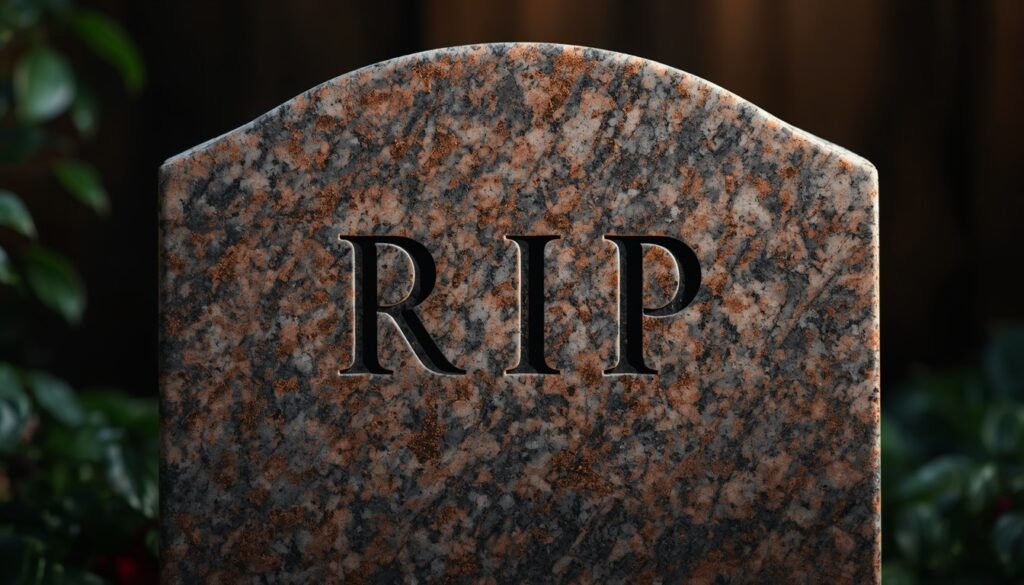
You may see it in a memorial post, obituary, message, photograph caption, or engraved inscription.
And while RIP is only three letters, the meaning behind it can be deeply personal.
Sometimes people write a long tribute.
Sometimes they write “RIP.”
Sometimes they don’t know what to say at all.
There isn’t a perfect formula for mourning. A respectful thought, honestly expressed, is usually enough.
Quick Questions
What is the RIP full form in death?
RIP means “Rest in Peace.” It is commonly used after someone’s death to express respect and remembrance.
Is RIP religious?
It has religious roots, particularly in Christian traditions, but people today often use it simply as a respectful expression after someone dies.
What does RIP mean on Facebook?
On Facebook, RIP usually means “Rest in Peace” when someone is posting about a deceased person or responding to a memorial announcement.
Can I use RIP in a condolence message?
Yes. It works for short memorial messages, although “I’m sorry for your loss” may be more personal when speaking directly to a grieving family.
Is RIP and R.I.P. the same thing?
Yes. The periods are simply a punctuation style; both forms mean the same thing in the context of death.