


If you have spent any time looking for manga online, chances are you have bumped into the name Kaliscan. It tends to appear in searches when someone wants a chapter quickly, especially when the official release schedule feels painfully slow. I get the appeal. You find a series, click a chapter, and you’re reading before you’ve had time to wonder where the site came from.
That convenience is probably the biggest reason the name keeps circulating.
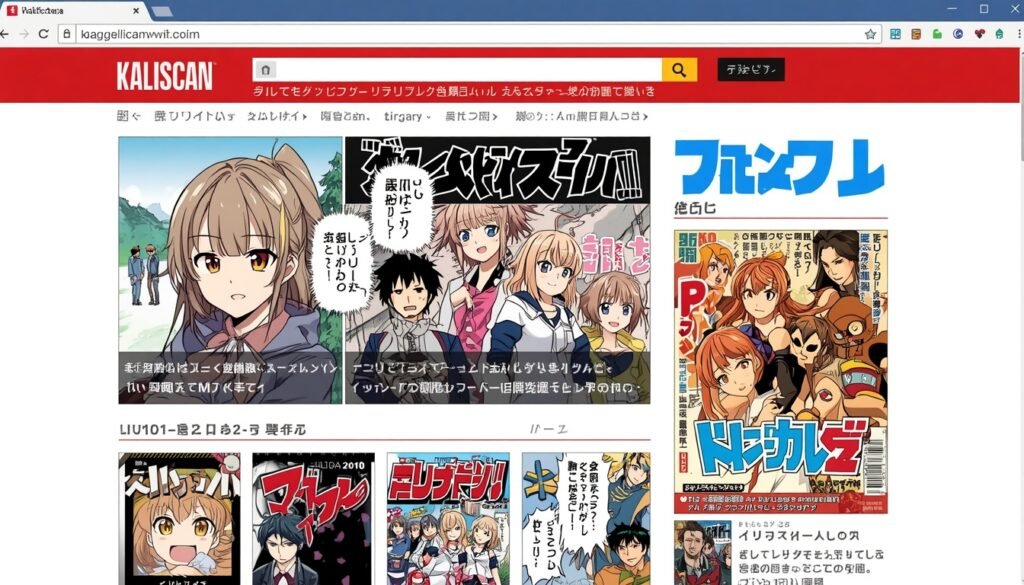
Kaliscan is generally described as a free online reader for manga, manhwa, and manhua. The site presents a large collection of titles in one browser-based library, with chapters arranged so readers can jump straight into a series. Some versions of the service have also been associated with very frequent updates, which is a big deal for readers following ongoing stories.
But there is a catch.
Free manga websites can be complicated territory. Availability changes, domains can move, and the source of the uploaded material isn’t always obvious. So if you’re wondering what Kaliscan actually is rather than simply searching for a chapter, there’s a little more to the story.
So, what exactly is Kaliscan?
At its simplest, Kaliscan is an online manga-reading platform. It has been associated with manga, Korean manhwa, and Chinese manhua, giving it a broader selection than the name might initially suggest.
The basic idea is familiar. Search for a title, open the series page, choose a chapter, and read it in your browser. No complicated setup. No special reader to learn.
And that’s probably why people remember it.
A typical series page contains information such as the title, cover, description, genres, and available chapters. Depending on the version or domain being used, the layout can change a little, but the overall experience stays fairly straightforward.
The library also covers the genres you’d expect from a large manga site: action, romance, fantasy, comedy, horror, drama, isekai, and plenty of other categories. Some readers are there for one particular series. Others end up wandering around because they see something interesting in the popular or recently updated sections.
That second group is dangerous for productivity.
One minute you’re checking a chapter. Forty minutes later, you’re three series deep and wondering why it’s suddenly 2:17 in the morning.
Why the name shows up so often
Speed seems to be a major part of Kaliscan’s appeal. Online descriptions of the service emphasize frequent chapter updates and a large collection, which naturally attracts readers who dislike waiting around for a release.
There is another reason, though: simplicity.
A reader usually doesn’t want a lecture before opening a chapter. They want the chapter. Kaliscan’s browser-based approach fits that expectation because the main activity happens directly on the website.
And the format works particularly well for modern manhwa.
Long vertical pages are much easier to read on a phone when the reader doesn’t keep interrupting you with awkward page controls. Manga can work well too, although traditional manga’s panel layout sometimes feels better on a dedicated reader.
The search function is another small thing that matters. A huge catalog is useless if finding a specific title feels like looking for one particular receipt in a drawer full of old receipts. A reasonably organized search and genre system makes a noticeable difference.
Still, popularity doesn’t automatically mean quality.
That’s where I think people sometimes get carried away with the hype.
The reading experience is pretty straightforward
One thing I like about browser manga readers in general is that they remove friction. You don’t have to install a desktop program just to read a comic. You don’t need a powerful computer either.
A phone, tablet, or ordinary laptop can handle the basic task.
Kaliscan has been described as working directly through a web browser, with readers selecting a title and then moving through its chapters. The platform has also been associated with mobile-friendly reading and long-form image display for manhwa and manhua.
But your experience can depend heavily on the particular domain and how the site is operating that day.
That’s the annoying bit.
A page might load perfectly one afternoon and behave strangely the next. Images can take longer to appear. A chapter can disappear. A domain can stop responding. Services in this corner of the internet aren’t always as stable as official publishing platforms.
So if you find yourself thinking, “Why was this working yesterday?” you’re hardly the first person to ask.
Is Kaliscan safe?
This question deserves a more careful answer than a simple yes or no.
Several third-party website reputation services have reported positive technical signals for domains associated with Kaliscan, including valid SSL certificates and no major malware or phishing warnings in their checks. For example, Gridinsoft reported a high trust score for Kaliscan.io in July 2026, while other site-checking services have also reported generally positive technical indicators.
That sounds reassuring.
But a security check isn’t a guarantee that every advertisement, redirect, pop-up, or third-party element on a site is harmless. Those are separate issues. A domain can have a valid certificate and still provide an unpleasant browsing experience.
And I wouldn’t treat an SSL padlock as a magic safety badge. It only tells you that the connection is encrypted; it doesn’t prove that every piece of content on the website is trustworthy.
If you’re browsing any unfamiliar site, don’t install random browser extensions, applications, or files that suddenly appear because a page tells you to. Reading a web page shouldn’t require some mysterious “special player.”
That’s a red flag.
What about privacy?
This is another area where I would keep expectations realistic.
Some Kaliscan domains have privacy-protected registration information. For example, public records reported for Kaliscan.io show the registrant information is hidden through a privacy service.
Privacy protection for domain registration isn’t automatically suspicious. Plenty of legitimate website owners use it to avoid exposing personal contact details.
Still, it means visitors shouldn’t assume they know exactly who operates a particular domain.
And because similarly named domains can exist, checking the address carefully matters. A familiar-looking name doesn’t guarantee that two different domains are operated by the same people.
That distinction gets overlooked surprisingly often.
The legal side is a different question
Here’s where I would push back on a common belief: “If a website lets me read it for free, the content must be free to use.”
Nope.
The availability of a manga chapter on a website doesn’t automatically tell you whether the website has permission to distribute that chapter. Some online manga readers aggregate or host material that may not have been officially licensed for that distribution.
Kaliscan has been described by third-party sources as an aggregator-style reader rather than a conventional publisher.
That matters because copyright rules vary by country, and simply being able to access something doesn’t settle the legal question.
For readers, the practical takeaway is pretty simple: if a series matters to you, official releases are the safer way to support the people who created and translated it.
There is a creator behind those panels.
Somebody spent months, sometimes years, drawing characters that you now recognize instantly.
Why official platforms still have an advantage
Free is tempting. Obviously.
But official manga services have a few advantages that become clearer after you’ve used unofficial readers for a while. Licensed platforms generally provide authorized translations, more predictable availability, better consistency, and a direct connection to publishers or creators.
MANGA Plus by Shueisha, for example, provides official access to many manga chapters and has a worldwide focus. VIZ’s Shonen Jump service is another major licensed option for readers who want a larger official catalog. The exact availability and pricing depend on the region and title.
There is something satisfying about opening a chapter knowing you’re reading an authorized release.
And if you’re following a series weekly, reliability matters. You don’t want your reading routine depending on whether a random domain happens to be online that morning.
For someone who reads casually, that difference might not feel huge. For a serious manga fan, it can become surprisingly noticeable.
What should you know before using a site like this?
I wouldn’t overcomplicate it.
Keep your personal information private, don’t download mystery software, and don’t assume that every similarly named domain is automatically connected to the same service. If a page starts throwing strange prompts at you, close it rather than clicking through everything just to reach a chapter.
A few seconds of caution can save a lot of annoyance.
Also, remember that website addresses can change. Search results and old posts may point toward domains that no longer represent the service people originally discussed. Current third-party checks have identified several domains associated with the Kaliscan name, including .com, .io, and .me versions.
That doesn’t mean every domain is interchangeable.
It means the name alone isn’t enough to establish who operates a site or whether a particular address is current.
Why people keep coming back
There’s a very ordinary explanation for Kaliscan’s popularity: convenience.
People like having a search box, a chapter list, and a reader in one place. They like finding older titles without digging through several different services. They especially like quick updates when they’re already invested in a story.
Nothing mysterious about that.
The bigger question is whether the convenience outweighs the drawbacks. For some readers, it probably does. For others, the occasional broken chapter, uncertain licensing, advertisements, or domain confusion makes official platforms a much better long-term choice.
And honestly, I think the best approach is somewhere in the middle: understand what kind of site you’re dealing with before treating it like a normal publishing service.
Kaliscan is a recognizable name in the online manga-reading space, but its convenience shouldn’t make you forget the bigger picture. A free chapter is still part of somebody else’s work. A website with HTTPS is still worth treating carefully. And a familiar domain name is still something you should verify before trusting it.
Those little distinctions matter.
Especially online, where one missing letter can send you somewhere completely different.
A Few Questions People Ask
What is Kaliscan used for?
Kaliscan is associated with online reading of manga, manhwa, and manhua. Its main appeal is having many series and chapters available through a browser-based reader.
Is Kaliscan free?
The service has generally been presented as a free manga-reading website. Availability and features can vary between domains or versions.
Is Kaliscan legal?
That depends on the rights attached to the individual material and the jurisdiction involved. A website offering a chapter doesn’t, by itself, prove that the material has been officially licensed for distribution.
Why does Kaliscan sometimes stop working?
Online reader domains can experience outages, technical problems, or address changes. A third-party status check has reported occasional user complaints around Kaliscan.com, even while the domain’s server was responding.
Does Kaliscan have an official app?
Kaliscan is primarily known as a browser-based reading service. Be cautious with apps or downloads claiming to be official unless you can independently verify their source.